
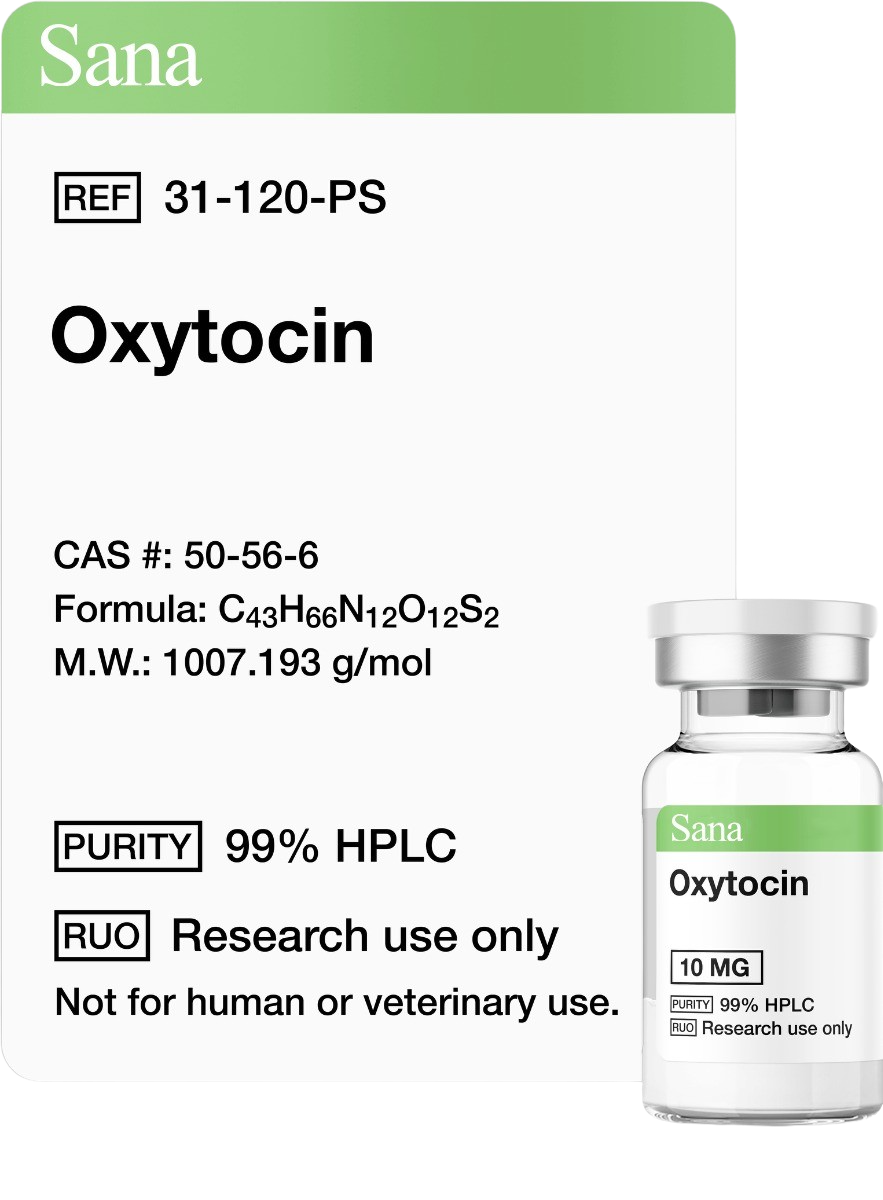
Oxytocin 10mg
$65.00
Oxytocin is a naturally occurring peptide hormone studied for its role in social behavior, neuroendocrine signaling, and biological communication pathways. Developed as a high-purity, research-grade compound for controlled laboratory use.
In Stock
Oxytocin is a naturally occurring peptide hormone that plays a critical role in neuroendocrine communication and physiological signaling processes. It functions both as a neuropeptide within the central nervous system—where it influences social behavior, emotional regulation, and neurological signaling—and as a circulating hormone involved in reproductive and lactation-related functions. Oxytocin is synthesized primarily in the hypothalamus and released through the posterior pituitary, with additional expression reported in various peripheral tissues, including reproductive organs.
In research settings, oxytocin is extensively studied for its involvement in behavioral science, neuronal signaling pathways, hormonal regulation, and synaptic plasticity. Ongoing investigations also explore its role in stress modulation, mood-related signaling, cardiovascular regulation, and tissue-level repair processes.
At Sana, oxytocin is produced under strict quality control standards to ensure high purity, accuracy, and batch consistency, making it suitable for advanced laboratory and educational research applications.
Biochemical Characteristics
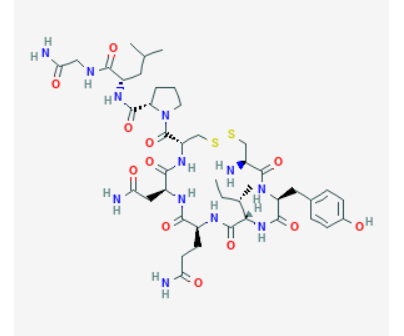
Source: PubChem
Sequence: Cys(1)-Tyr-Ile-Gln-Asn-Cys(1)-Pro-Leu-Gly
Molecular Formula: C43H66N12O12S2
Molecular Weight: 1007.193 g/mol
PubChem CID: 439302
CAS Number: 50-56-6
Synonyms: Pitocin, Endopituitrina, Ocytocin
Oxytocin is a cyclic nonapeptide stabilized by a disulfide bond between cysteine residues, forming a ring structure that supports receptor binding. In laboratory settings, oxytocin identity and purity are commonly confirmed using chromatographic and spectrometric methods to ensure consistency across experimental workflows.
Research Applications
Oxytocin is supplied for laboratory research and may be used as a tool compound in controlled non-clinical studies involving:
- Oxytocin receptor (OXTR) pharmacology, ligand binding, and receptor-selectivity experiments
- Second-messenger and downstream signaling studies (e.g., intracellular calcium dynamics and kinase/transcriptional responses)
- Neuroendocrine research models evaluating stress responsivity, social behavior paradigms, and neuronal plasticity endpoints
- Reproductive physiology signaling studies (uterine contractility pathways, lactation-related signaling, and tissue-level responses)
- Inflammation and wound-healing research frameworks assessing cytokine signatures and repair-related biomarkers
- Cardiometabolic and vascular signaling investigations in preclinical models (blood pressure, metabolic endpoints, and inflammatory mediators)
All applications are restricted to in-vitro and in-vivo animal research contexts and are not intended for human diagnostic or therapeutic use.
Pathway / Mechanistic Context
Oxytocin mediates its primary effects through the oxytocin receptor (OXTR), a G protein–coupled receptor expressed in both central nervous system and peripheral tissues (including reproductive tissues and vascular-related cell types). In canonical signaling models, OXTR engagement is commonly associated with phospholipase C activation, inositol phosphate signaling, and intracellular calcium mobilization, enabling context-dependent downstream phosphorylation events and transcriptional responses.
In research settings, oxytocin signaling is frequently studied across multiple biological layers—from receptor pharmacology and intracellular signaling to tissue-level physiology and behavior—because central release (neuropeptide signaling) and peripheral circulation (hormonal signaling) can map to distinct experimental endpoints.
Preclinical Research Summary
Wound Healing, Inflammation, and Social Stress Biology
Research has examined oxytocin-related physiology in the context of interpersonal interaction, inflammatory signaling, and repair outcomes. Human and translational studies have evaluated associations among relationship behaviors, hormone-related dynamics, cytokine activity, and wound healing trajectories [1], [2].
Cardiovascular and Vascular-Inflammatory Signaling Frameworks
Reviews and preclinical investigations have discussed oxytocin signaling in cardiovascular risk frameworks, including potential links to blood pressure regulation, inflammatory modulation, and receptor-mediated pathways relevant to atherosclerotic disease mechanisms [3], [4], [5].
Metabolic Homeostasis (Obesity & Dysglycemia Models)
Oxytocin signaling has been explored in energy balance and metabolic homeostasis research, including studies evaluating adiposity-related endpoints and insulin sensitivity in controlled models. Literature reviews and experimental work discuss phenotype-dependent responses (e.g., lean vs. obese contexts) and summarize clinical-adjacent trial observations in obesity and dysglycemia research [8], [9], [10].
Stress, Cognition, and Anxiety-Related Behavioral Models
Preclinical research has evaluated oxytocin within stress paradigms and developmental adversity models, including learning/cognition measures, anxiety-like behavior endpoints, and hippocampal signaling marker assessments [11], [12].
Social Bonding, Attachment, and OXTR Epigenetic/Genetic Associations
A substantial body of work examines oxytocin receptor biology (including genetics and epigenetics) in relation to social and anxiety phenotypes. Reviews and cohort studies have evaluated oxytocin receptor methylation and broader oxytocin-related signaling correlates in social anxiety and behavioral dimensions [13], [14], [15].
Neural Circuitry and Feeding Regulation
Oxytocin signaling has also been discussed in neural circuit research relevant to hunger and feeding behavior, contributing to broader mapping of neuroendocrine regulation of energy intake [16].
Oxytocin exhibits minimal side effects, low oral and excellent subcutaneous bioavailability in mice. Per kg dosage in mice does not scale to humans. Oxytocin for sale is limited to educational and scientific research only, not for human consumption. Only buy Oxytocin if you are a licensed researcher.
Form & Analytical Testing
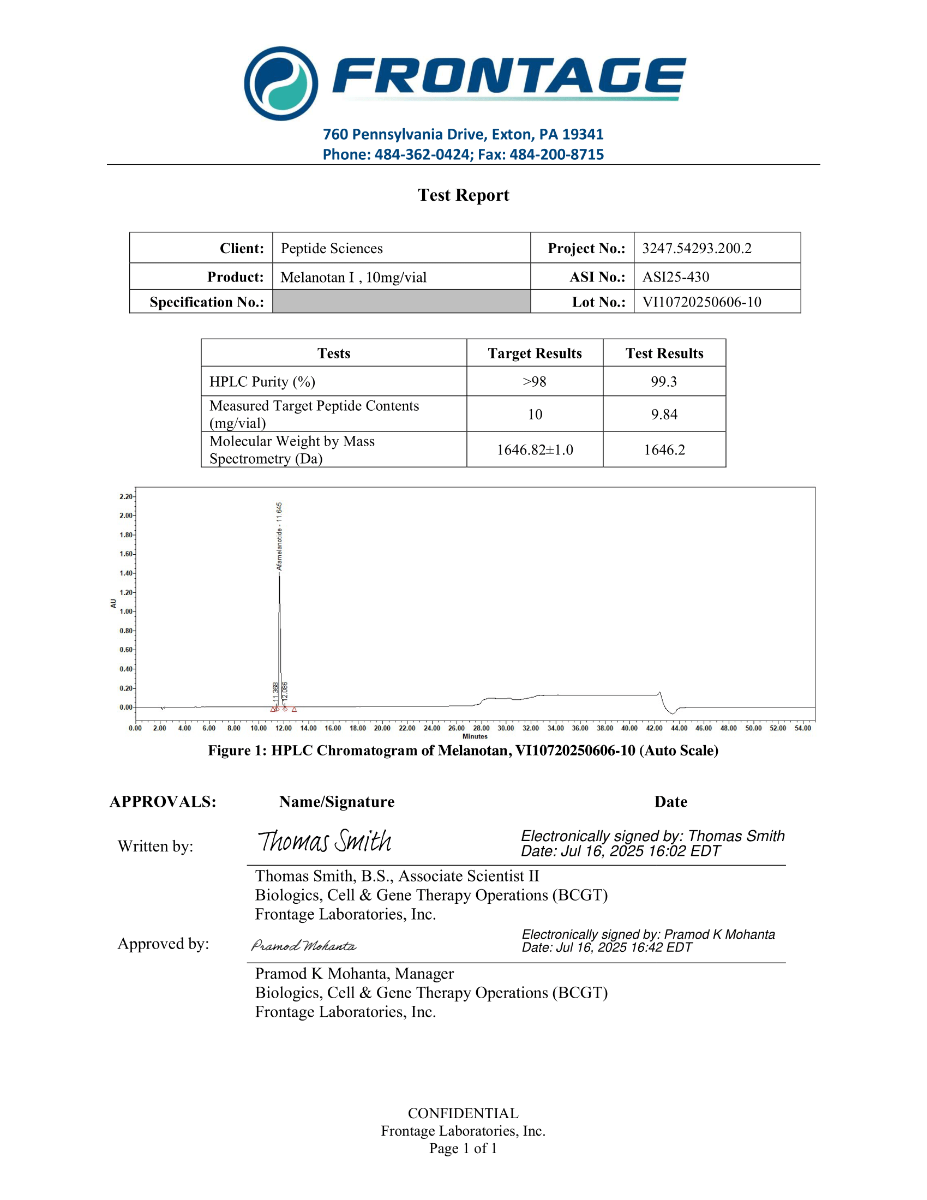
Oxytocin supplied for research is typically prepared as a synthetic peptide for laboratory handling. Product identity and purity are commonly confirmed using high-performance liquid chromatography (HPLC) and mass spectrometry (MS). Batch-specific analytical documentation supports reproducibility and experimental consistency.
Supporting quality documentation may include a Certificate of Analysis (COA), HPLC chromatograms, and MS reports for research reference.
Referenced Citations
- -P. Gouin et al., “Marital behavior, oxytocin, vasopressin, and wound healing,” Psychoneuroendocrinology, vol. 35, no. 7, pp. 1082–1090, Aug. 2010. [PubMed]
- K. Kiecolt-Glaser et al., “Hostile marital interactions, proinflammatory cytokine production, and wound healing,” Arch. Gen. Psychiatry, vol. 62, no. 12, pp. 1377–1384, Dec. 2005. [PubMed]
- B. Reiss et al., “Oxytocin: Potential to mitigate cardiovascular risk,” Peptides, vol. 117, p. 170089, Jul. 2019. [PubMed]
- Wang et al., “Therapeutic Potential of Oxytocin in Atherosclerotic Cardiovascular Disease: Mechanisms and Signaling Pathways,” Front. Neurosci., vol. 13, p. 454, 2019. [Full Text]
- Jankowski, T. L. Broderick, and J. Gutkowska, “Oxytocin and cardioprotection in diabetes and obesity,” BMC Endocr. Disord., vol. 16, no. 1, p. 34, Jun. 2016. [PubMed]
- Plante et al., “Oxytocin treatment prevents the cardiomyopathy observed in obese diabetic male db/db mice,” Endocrinology, vol. 156, no. 4, pp. 1416–1428, Apr. 2015.
- Kolukcu et al., “The effects of oxytocin on penile tissues in experimental priapism model in rats,” Int. Urol. Nephrol., vol. 51, no. 2, pp. 231–238, Feb. 2019. [PubMed]
- Ding, M. K.-S. Leow, and F. Magkos, “Oxytocin in metabolic homeostasis: implications for obesity and diabetes management,” Obes. Rev., vol. 20, no. 1, pp. 22–40, 2019. [PubMed]
- Altirriba et al., “Divergent effects of oxytocin treatment of obese diabetic mice on adiposity and diabetes,” Endocrinology, vol. 155, no. 11, pp. 4189–4201, Nov. 2014. [PubMed]
- Barengolts, “Oxytocin – An emerging treatment for obesity and dysglycemia: review of randomized controlled trials and cohort studies,” Endocr. Pract., vol. 22, no. 7, pp. 885–894, Jul. 2019. [PubMed]
- Dayi et al., “Dose dependent effects of oxytocin on cognitive defects and anxiety disorders in adult rats following acute infantile maternal deprivation stress,” Biotech. Histochem., May 2019. [PubMed]
- Dayi et al., “The effects of oxytocin on cognitive defect caused by chronic restraint stress applied to adolescent rats and on hippocampal VEGF and BDNF levels,” Med. Sci. Monit., vol. 21, pp. 69–75, Jan. 2015. [PMC]
- G. Gottschalk and K. Domschke, “Oxytocin and Anxiety Disorders,” Curr. Top. Behav. Neurosci., vol. 35, pp. 467–498, 2018. [Europe PMC]
- Ziegler et al., “Oxytocin receptor gene methylation: converging multilevel evidence for a role in social anxiety,” Neuropsychopharmacology, vol. 40, no. 6, pp. 1528–1538, May 2015. [PubMed]
- Brüne, “On the role of oxytocin in borderline personality disorder,” Br. J. Clin. Psychol., vol. 55, no. 3, pp. 287–304, Sep. 2016. [PubMed]
- Atasoy et al., “Deconstruction of a neural circuit for hunger,” Nature, vol. 488, no. 7410, pp. 172–177, Aug. 2012. [Nature]
- Yang, “‘Trust hormone’ oxytocin helps old muscle work like new, study finds,” Berkeley News, Jun. 2014. [Berkeley News]
ALL ARTICLES AND PRODUCT INFORMATION PROVIDED ON THIS WEBSITE ARE FOR INFORMATONAL AND EDUCATIONAL PURPOSES ONLY.
RUO Disclaimer
The products offered on this website are furnished for in-vitro studies only. In-vitro studies (Latin: in glass) are performed outside of the body. These products are not medicines or drugs and have not been approved by the FDA to prevent, treat or cure any medical condition, ailment or disease. Bodily introduction of any kind into humans or animals is strictly forbidden by law.
For Laboratory Research Only. Not for human use, medical use, diagnostic use, or veterinary use.
Storage Information
-
Store in a cool, dry environment
-
Protect from heat, moisture, and light
-
Keep container securely sealed when not in use
-
Handle using standard laboratory safety protocols
Related products
In Stock