Tesamorelin 2mg (10 Vial Kit)
Price range: $75.00 through $300.00
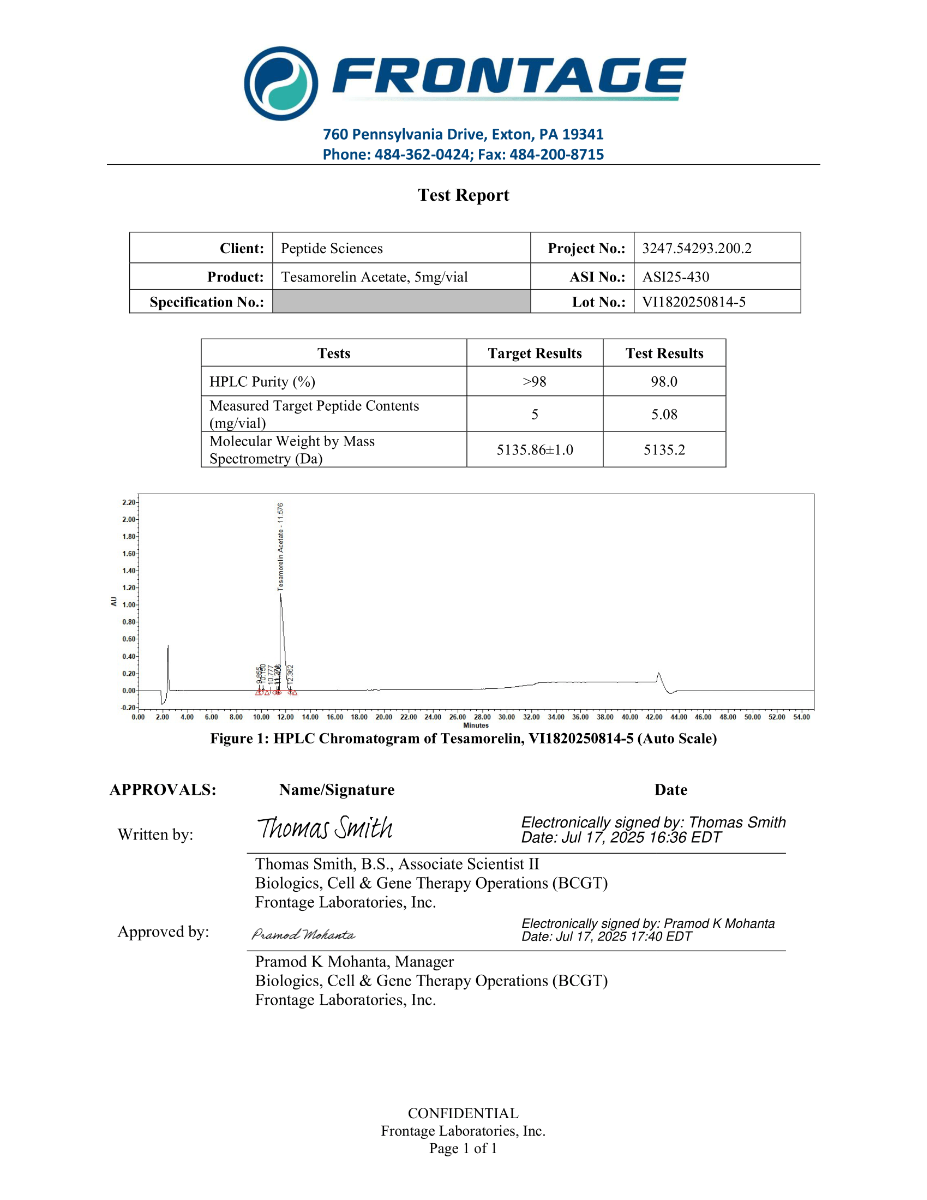
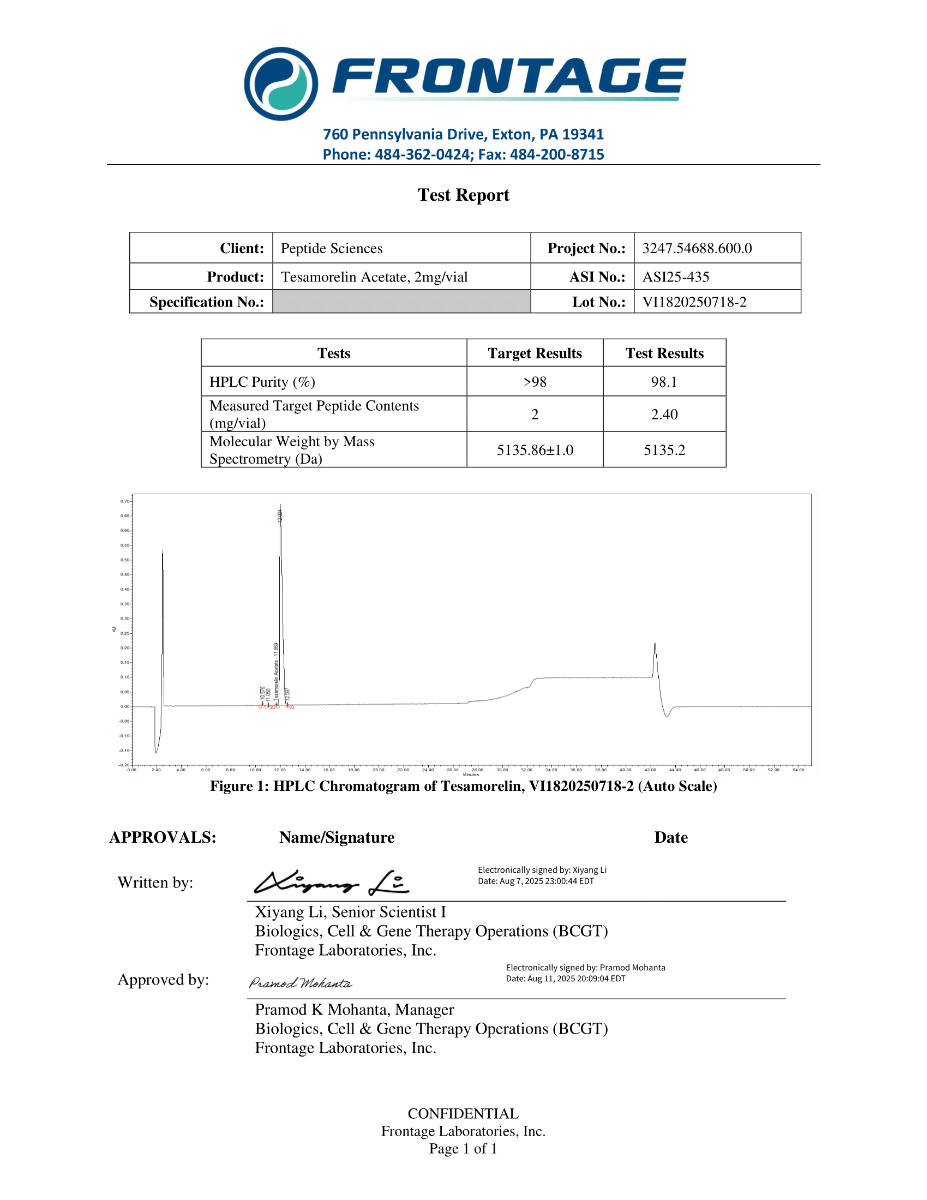
Boost your wellness and support healthy body composition with Sana Tesamorelin, available in two convenient variations: 2 mg (10-vial kit) and 5 mg. Lab-tested, pure, and effective.
Tesamorelin is a synthetic growth hormone–releasing hormone (GHRH) analogue used as a laboratory tool compound to investigate growth hormone–releasing hormone receptor (GHRHR) signaling and downstream endocrine pathway dynamics in preclinical experimental systems. The molecule incorporates an additional trans-3-hexanoic acid group, a peptide-chemistry modification often used to modulate physicochemical stability and proteolytic susceptibility in biological matrices. In RUO settings, tesamorelin is applied in mechanistic studies of receptor-coupled signaling, endocrine feedback circuitry, and GH/IGF-axis–associated molecular readouts in controlled in-vitro assays and in-vivo animal models.
Tesamorelin Structure
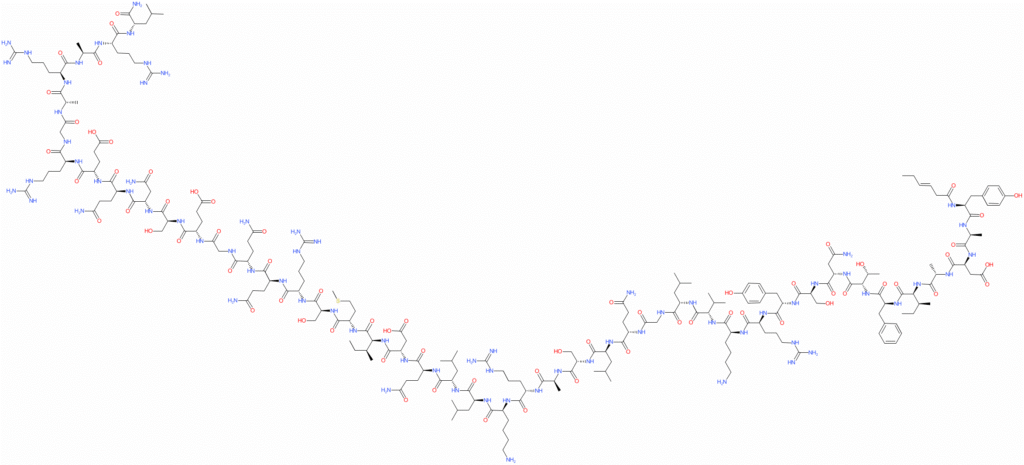
Sequence (Single Letter): Unk-Tyr-Ala-Asp-Ala-Ile-Phe-Thr-Asn-Ser-Tyr-Arg-Lys-Val-Leu-Gly-Gln-Leu-Ser-Ala-Arg-Lys-Leu-Leu-Gln-Asp-Ile-Met-Ser-Arg-Gln-Gln-Gly-Glu-Ser-Asn-Gln-Glu-Arg-Gly-Ala-Arg-Ala-Arg-Leu
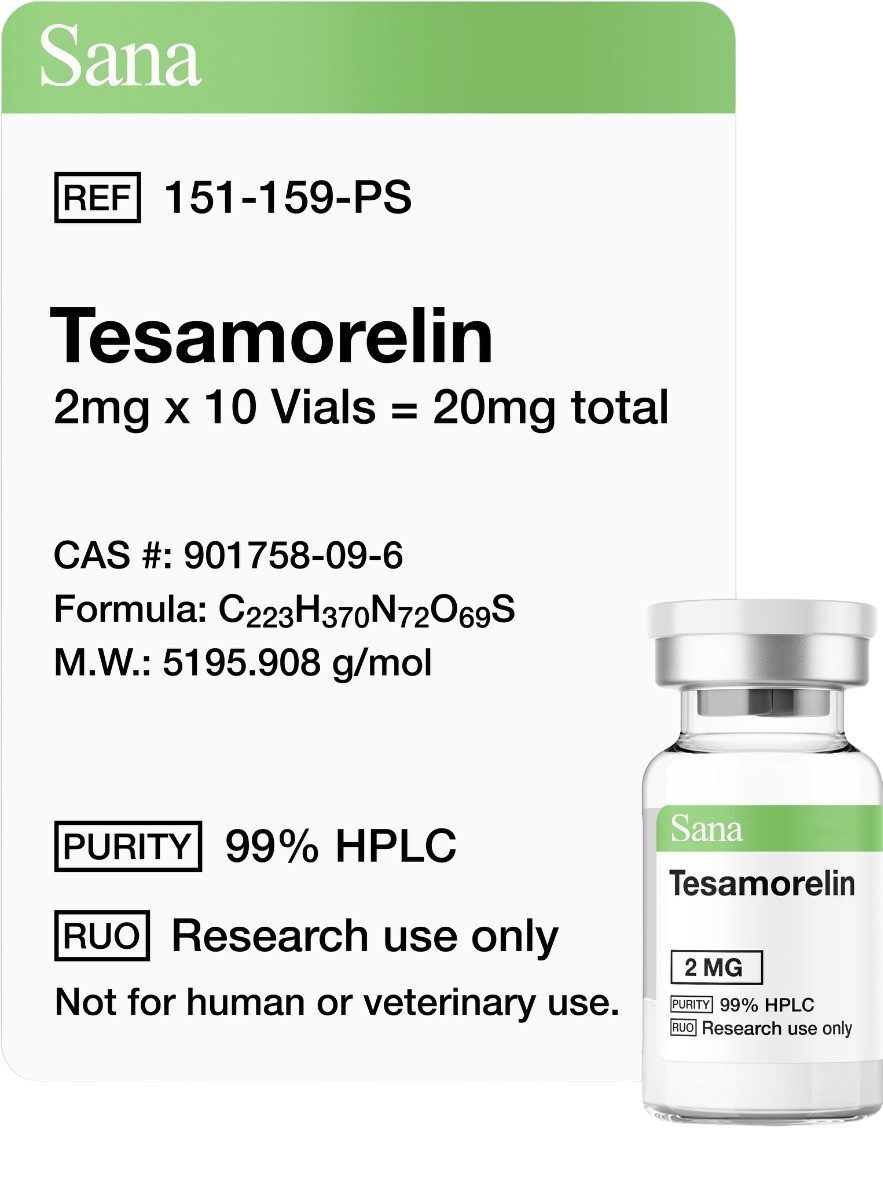
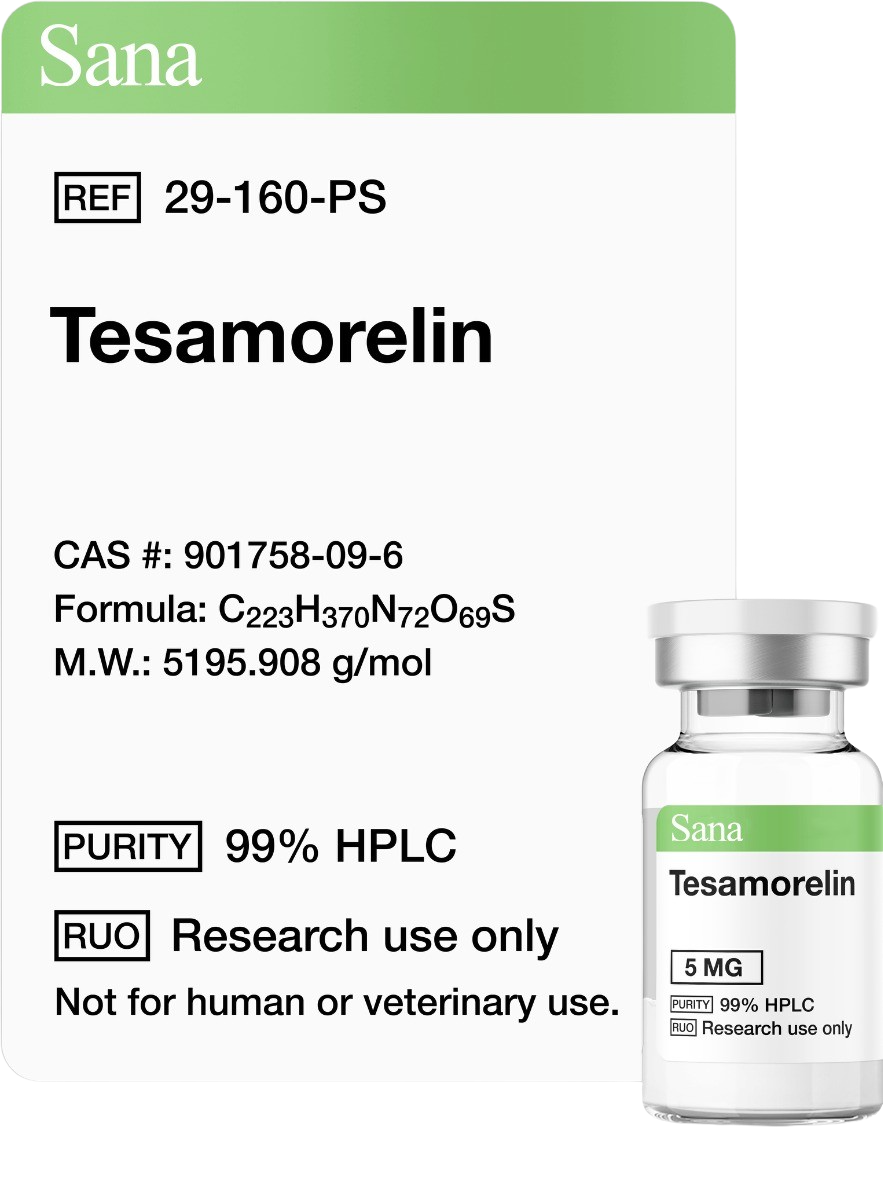
Molecular Formula: C223H370N72O69S
Molecular Weight: 5195.908 g/mol
PubChem CID: 44147413
CAS Number: 901758-09-6
Tesamorelin Research
As a GHRH analogue, tesamorelin is used in laboratory research to probe GHRHR activation and downstream signaling associated with GH/IGF-axis regulation. In experimental contexts, GHRHR engagement is commonly associated with GPCR-mediated signaling (often Gs/cAMP-linked), modulation of kinase activity, and transcriptional programs that influence endocrine signaling dynamics. The trans-3-hexanoic acid modification is used in peptide engineering to support reproducible exposure profiles in controlled research workflows and to facilitate mechanistic interrogation of receptor signaling and feedback regulation.
Experimental Modeling of Visceral Adiposity & Lipid Biomarkers
Published studies have evaluated tesamorelin and related growth hormone–releasing factor analogues in research cohorts using metabolic endpoints and biomarker readouts. Reported analyses include associations between changes in visceral adipose tissue measures and lipid parameters such as triglycerides [3], [4]. These citations are provided strictly for scientific background and do not imply any intended medical, diagnostic, or therapeutic use.

Figure included as an educational reference to the cited publication record.
Source: PubMed
Endocrine Axis Research in Chronic Infection Models
Reviews and mechanistic discussions have described endocrine and metabolic alterations observed in chronic infection research settings, including reported changes in growth hormone axis parameters [5]. In RUO laboratories, tesamorelin may be used as a receptor-directed probe to evaluate signaling relationships and endocrine feedback behavior under controlled experimental conditions.
Peripheral Nerve Biology & Growth Hormone Axis Augmentation (Preclinical Context)
The growth hormone axis has been discussed in preclinical literature as a modulator of cellular environments relevant to peripheral nerve injury models and regenerative biology research. Reviews have summarized potential mechanistic links between endocrine signaling and experimental outcomes in nerve repair paradigms [6]. These discussions support hypothesis generation for mechanistic studies (e.g., growth factor signaling, Schwann cell-associated pathways, and axonal outgrowth processes) in non-clinical settings.
Neuroendocrine Signaling & Biomarker Readouts in Cognitive Research
GHRH analogues have been evaluated in published research using biomarker and neurochemical readouts, including spectroscopy-associated measures and neurotransmitter-related endpoints, as part of broader investigations into neuroendocrine signaling in aging models [7]. References are provided for pathway context only.
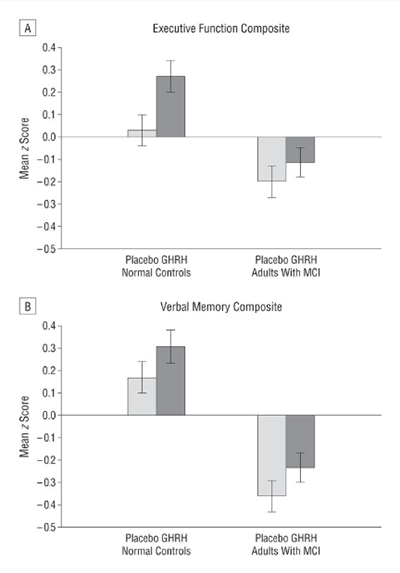
Figure included as an educational reference to the cited publication record.
Source: PubMed
Future Tesamorelin Research
Because tesamorelin is a well-characterized GHRH-pathway probe, ongoing research interest includes additional mechanistic mapping of GHRHR signaling kinetics, receptor desensitization, and endocrine feedback behavior in controlled experimental systems. Additional preclinical directions discussed in the literature include exploratory study designs that evaluate biomarker relationships in metabolic research and neuroendocrine signaling frameworks, as well as non-clinical investigations of endocrine influences on peripheral nerve biology [1]. Any mention of “trials” or “approval” in external sources is not an indication of intended use for this product; this material is supplied strictly for laboratory research.
This product is furnished exclusively for scientific research and educational purposes in controlled laboratory environments.
Resources
Clinical Review Report: Tesamorelin (Egrifta). Ottawa (ON): Canadian Agency for Drugs and Technologies in Health, 2016.
ALL ARTICLES AND PRODUCT INFORMATION PROVIDED ON THIS WEBSITE ARE FOR INFORMATONAL AND EDUCATIONAL PURPOSES ONLY.
RUO Disclaimer
The products offered on this website are furnished for in-vitro studies only. In-vitro studies (Latin: in glass) are performed outside of the body. These products are not medicines or drugs and have not been approved by the FDA to prevent, treat or cure any medical condition, ailment or disease. Bodily introduction of any kind into humans or animals is strictly forbidden by law.
For Laboratory Research Only. Not for human use, medical use, diagnostic use, or veterinary use.
Storage Information
-
Store in a cool, dry environment
-
Protect from light and moisture
-
Keep vial tightly sealed when not in use
-
Handle using standard laboratory safety protocols
Related products
Ipamorelin
Price range: $30.00 through $46.00
Melanotan 2 (MT2)
Price range: $50.00 through $140.00
Selank 10mg
$55.00